
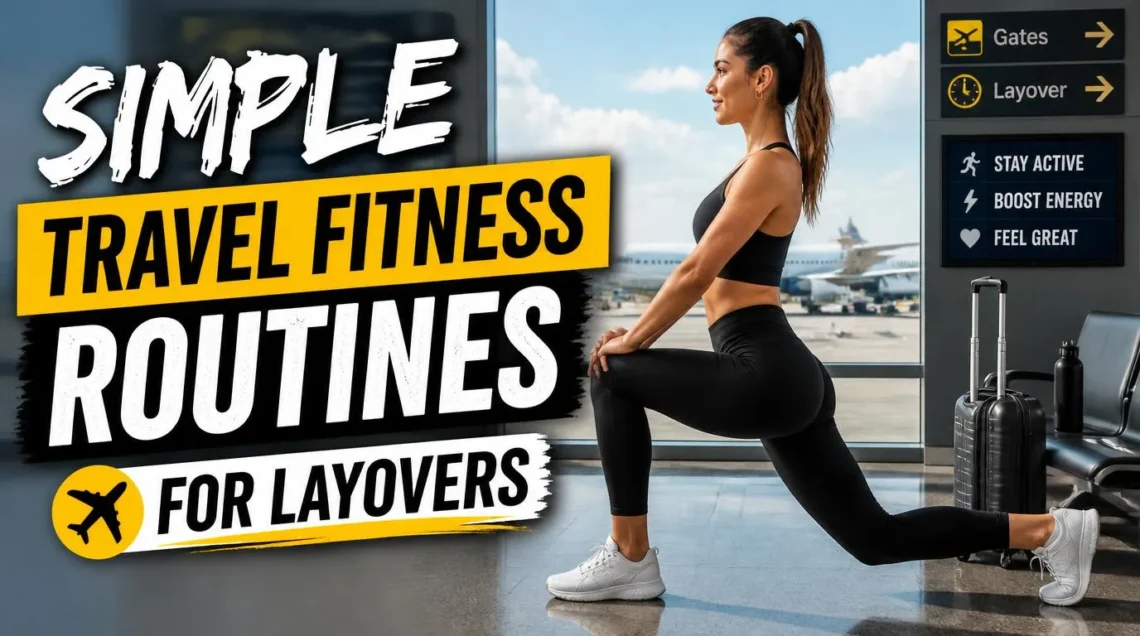
The night before a travel day, I check my connection time in the airline app and subtract the boring but necessary stuff first. Immigration, terminal transfers, restroom breaks, food, and security can eat a shocking amount of time, especially at huge airports like Heathrow, Atlanta, or Dubai.
I only plan a workout when I have at least 90 minutes beyond those essentials. Forty-five free minutes gives me enough room to walk, stretch, clean up, and reach my gate without sprinting through the terminal with one shoe half tied.
Find Your Movement Zone Before You Get Hungry
Airport hunger makes every decision worse. I look for a quiet gate area, an empty hallway, a family restroom corridor, or a hotel fitness room before I buy coffee and accidentally settle into a chair for two hours.
Google Maps can help outside the terminal, but inside, I use the airport’s official app or terminal map. Many airports now show walking times between gates, and that information matters. A “quick” walk from Terminal A to Terminal C can turn into a 25-minute trek with trains, escalators, and confused tourists stopping dead in front of you.
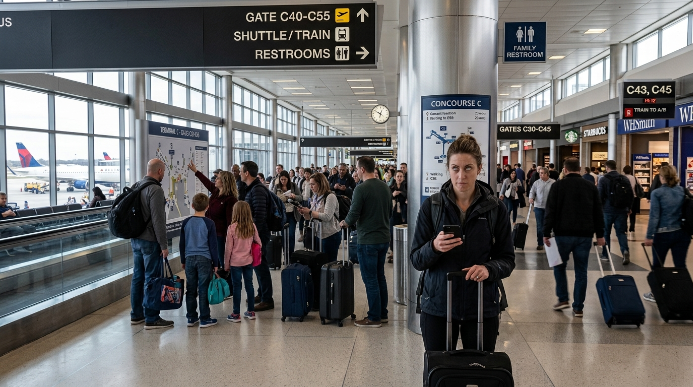
Build Simple Travel Fitness Routines for One-Day Layover Travelers
My favorite routine needs no mat, no shower, and no heroic motivation. I set a 12-minute timer on my phone, then repeat this circuit three times: 10 bodyweight squats, 8 reverse lunges per leg, 10 incline push-ups against a sturdy wall or bench, 12 standing calf raises, and 30 seconds of marching with high knees.
This version of Simple Travel Fitness Routines for One-Day Layover Travelers wakes up the muscles that complain most after sitting: hips, glutes, calves, shoulders, and upper back. I move slowly and leave plenty of space around me. Nobody wants to become the person doing dramatic burpees beside a gate full of exhausted strangers.
Turn Your Terminal Walk Into Useful Cardio
Rather than pacing in circles near my gate, I choose one end of the terminal and walk there with purpose. I aim for 20 to 30 minutes at a pace where I breathe a little harder but can still hold a conversation.
I like using the Apple Fitness app, Fitbit, or a basic phone step counter, but I do not obsess over the number. A brisk pace matters more than hitting 10,000 steps while dragging a roller bag. If I carry a backpack, I loosen the shoulder straps every few minutes so I do not create a fresh knot in my neck.
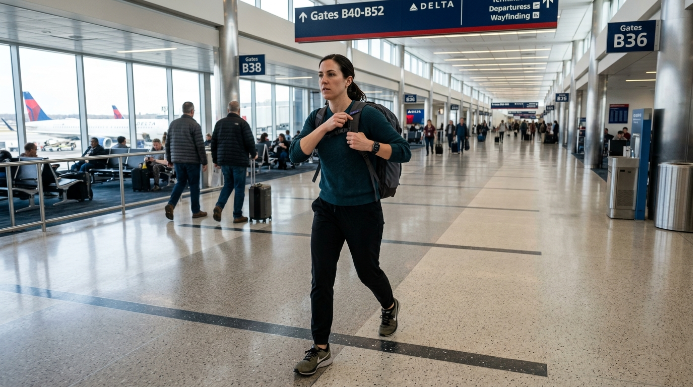
Give Tight Hips and Ankles Five Minutes
Long flights turn my hips into rusty hinges, so I always make time for a compact mobility reset. I do standing hip circles, gentle hamstring folds, ankle circles, and a figure-four stretch while holding a wall or bench for balance.
Avoid forcing deep stretches when your body still feels cold and stiff. I learned that lesson after trying to impress myself with a dramatic lunge stretch at Schiphol, then spending the next hour annoyed at my irritated knee. Gentle range of motion works better than pushing for flexibility in an airport.
Use Airport Gyms and Day Passes Carefully
Some airports offer fitness rooms, yoga spaces, showers, or hotel day passes. I have used airport hotel gyms during long layovers, and they feel glorious after an overnight flight, but only when the timing makes sense.
Call ahead or check the hotel website before you walk over. Many properties limit gym access to overnight guests, and some charge more than a decent meal for a day pass. A quick treadmill walk and shower can feel worth it on a one-day layover, but not if you spend half your free time checking in and out.
Pack One Tiny Fitness Kit
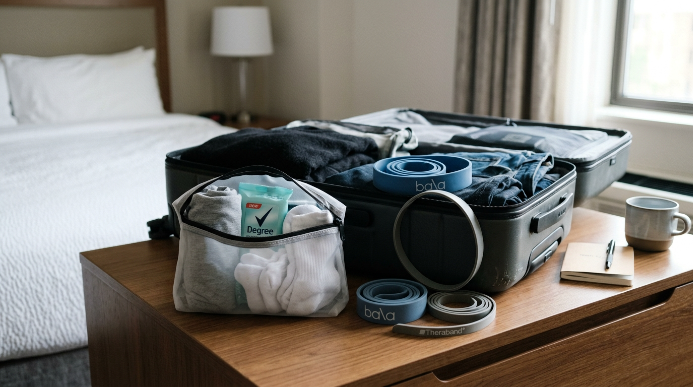
A small resistance band earns its place in my carry-on every time. It weighs almost nothing, costs little, and lets me do rows, pull-aparts, side steps, and shoulder work in a quiet corner without hauling equipment through security.
I also pack clean socks, deodorant wipes, and a spare T-shirt in a zip pouch. Fresh clothes make a short workout feel practical instead of grimy. Brands like Bala and Theraband make compact bands, although any simple loop band works fine. Skip heavy weights, massage guns, and anything that creates extra bag stress.
Eat and Drink Like You Still Have Another Flight
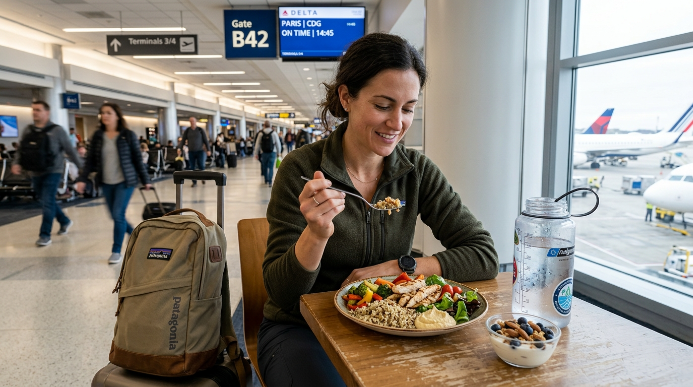
Movement helps, but dehydration and salty airport food can still make you feel puffy and sluggish. I refill my water bottle after security, then pair it with a meal that includes protein, fiber, and something colorful when I can find it.
Airport options rarely look perfect, and that is fine. Greek yogurt, eggs, a grain bowl, fruit, nuts, or a turkey sandwich usually beat fries followed by a giant cookie that leaves me sleepy at boarding. Steady energy matters more than eating like a wellness influencer under fluorescent lights.
Finish With a Calm Pre-Boarding Reset
About 20 minutes before boarding, I stop exercising and switch into travel mode. I wash my hands, refill water, charge my phone, use the restroom, and check the gate screen again because airlines love a last-minute surprise.
This final pause keeps Simple Travel Fitness Routines for One-Day Layover Travelers from becoming another source of travel stress. I also take three slow breaths before joining the boarding line. It sounds almost too simple, but it helps me board less rushed, less stiff, and far less likely to glare at someone fighting a carry-on suitcase overhead.
Frequently Asked Questions
How long should a layover workout last?
Twenty to 30 minutes works well for most travelers, especially when you still need to eat, use the restroom, and reach another terminal. A short walk plus five minutes of mobility can help more than a rushed hour-long workout that leaves you sweaty and anxious.
Can I exercise in an airport terminal?
Yes, as long as you choose a quiet, open spot and stay aware of other passengers. Walking, calf raises, wall push-ups, and gentle stretches usually fit the setting well. Avoid blocking gates, using equipment that takes up space, or doing floor exercises in crowded public areas.
What should I pack for Simple Travel Fitness Routines for One-Day Layover Travelers?
Bring a light resistance band, comfortable walking shoes, deodorant wipes, and a clean top if space allows. I also keep a refillable water bottle handy. You do not need a full gym bag, and packing too much defeats the point of keeping travel movement simple.
Should I work out after a long overnight flight?
Listen to how you feel first. A gentle walk and mobility work usually help after poor sleep, but hard intervals can feel awful when you are dehydrated or jet-lagged. Eat something small, drink water, and choose easy movement if your body feels foggy.
Is it safe to leave the airport during a one-day layover?
It can be, but only if you have enough time for immigration, transportation, and security when you return. I prefer staying inside when my connection falls under six hours. Airport walks, hotel gyms, and terminal stretches remove the risk of getting stuck in traffic.
Conclusion
A layover does not need to leave you stiff, overfed, and desperate to sit down again. Give yourself a little room to walk, stretch, and reset, then board feeling more like yourself. What is your favorite way to move when you are stuck at an airport?