
Hiking alone is the ultimate recharge button for an overstimulated mind. But when you are solo, your thoughts can become an overwhelming flood of ideas, reflections, and sudden realizations. Trying to document all of this with heavy, complicated writing routines defeats the purpose of escaping into nature.
We do not want to carry a giant leather-bound tome or spend hours writing by a campfire when our feet are throbbing. Instead, we need low-pressure ways to capture the essence of our journeys. The right journaling method should feel like a gentle release valve for your thoughts, not another chore on your backcountry checklist.
1. The Six-Word Memoir
Sometimes a long trail day leaves you too exhausted for paragraphs. This method forces you to summarize your entire experience in exactly six words. It acts as a fun creative challenge that captures the mood of your day without requiring any real stamina.
You might write something like “Rained all day, boots are soaked” or “Summit views cured my sore knees.” Keeping it this short lets you focus on the most impactful feeling of the trip. I love using a tiny pocket-sized notebook for this to keep it light.
2. Audio Bullet Journals
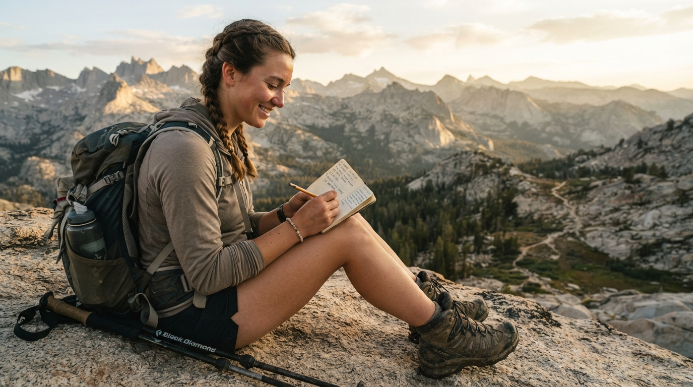
If you hate stopping to write while hiking, try recording your voice instead. Speaking your thoughts into your phone’s voice memo app feels completely natural when nobody else is around. It lets you capture raw, unfiltered emotions right as you encounter a gorgeous viewpoint.
You can easily transcribe these audio clips later when you are back in civilization. Using a simple dictation app like Otter makes this process incredibly fast and painless. It keeps your hands free for trekking poles while preserving the exact tone of your voice.
3. The Leaf and Flower Press
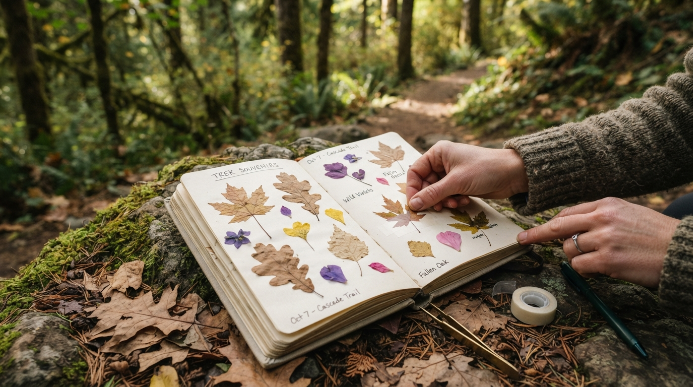
Nature offers the best souvenirs if you know where to look. Pressing fallen leaves or wild petals between your journal pages creates a beautiful, tactile map of your trek. This quiet activity requires zero words but speaks volumes about the terrain you crossed.
Just make sure you only harvest items that have already fallen to the ground to respect the environment. A tiny strip of acid-free tape secures your natural treasures without damaging the paper over time. It is a wonderful way to build a visual diary of your favorite hikes.
4. Photo Captioning
We all take dozens of photos on the trail, but they often sit forgotten in our digital galleries. Try printing a few favorite shots with a portable thermal printer once you set up camp. Sticking them into a notebook and writing a single sentence underneath creates an instant story.
This visual style keeps things low-stress because the image does most of the heavy lifting. A lightweight mini printer like the Fujifilm Instax Link fits easily into your pack brain. You get to play with a fun creative layout while keeping your writing to a bare minimum.
5. The Daily Gratitude List
When solo hiking gets tough, your mind can easily spiral into negative thoughts about blisters and heavy packs. Shifting your focus to three quick things you are grateful for can change your entire outlook. This simple list takes less than two minutes to write down before bed.
You do not have to write anything profound to make this practice highly effective. Jotting down things like dry socks, a warm sleeping bag, or a sweet trail snack works beautifully. This focused approach builds a highly positive mental archive of your wilderness adventures.
6. Mind Mapping
Linear writing does not always fit the chaotic, creative way our brains process solitude. Mind mapping lets you draw a central bubble for your day and branch out with random thoughts, sensations, and sights. You can connect your feelings with simple lines instead of writing formal sentences.
This visual web allows your thoughts to flow freely without the pressure of proper grammar. You might draw a branch for the blue jay you saw, connecting to the cool breeze it stirred up. It is a highly expressive method for visual thinkers who prefer maps over paragraphs.

7. The Weather and Wilds Log
If personal feelings feel too intimate or difficult to write down, focus on the external world instead. Keep a structured log of the temperature, wind conditions, cloud patterns, and animal sightings. This objective style of journaling takes the pressure off your inner thoughts completely.
You can use a pre-formatted waterproof notepad like Rite in the Rain to make this incredibly easy. It feels like a scientific expedition, which is highly satisfying for analytical minds. Plus, you will build a useful archive of local trail conditions for future trips.
8. Sketching the Horizon
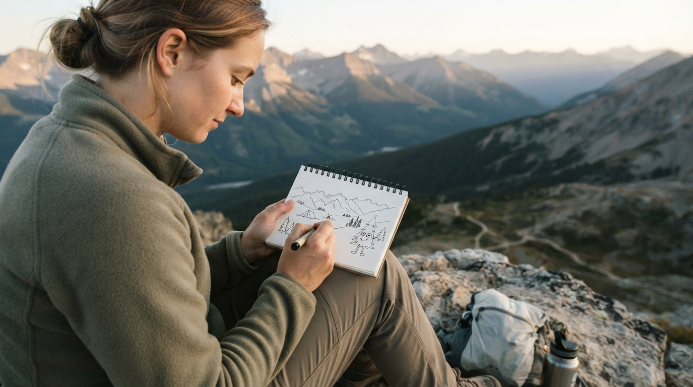
You do not need to be a professional artist to draw your trail experiences. Simple line drawings of mountain ridges, tent silhouettes, or interesting trees can capture a mood perfectly. The slow act of drawing forces you to look at your surroundings with deep attention.
A basic black fineliner pen is all you need to create striking, minimalist trail sketches. If a drawing goes wrong, you can just laugh it off and turn it into a silly cartoon. This creative process is incredibly meditative and keeps you grounded in the present moment.
9. Postcard Journaling
Writing in a blank journal can feel intimidating because of all that empty space. Try buying a postcard from a local trail town visitor center instead of carrying a full notebook. Writing a few quick thoughts on the back gives you a very strict physical limit.
You can mail these cards to your own home address as a lovely surprise for your future self. They arrive with unique local postmarks that add extra character to the memory. It is a cheap, compact way to collect your hiking memories step by step.
10. 5-Minute Free Writing
Sometimes you just need to dump everything out of your brain so you can sleep peacefully. Set a timer for five minutes on your watch and write continuously without stopping your pen. Do not worry about spelling, punctuation, or even making sense during this brain dump.
Once the timer dings, close the notebook and do not look at what you wrote. This practice works as an emotional release valve for any stress or loneliness that crept in. It clears your mental slate so you can wake up refreshed for the next climb.
11. The Sensory Grid
Our senses are highly active when we spend time alone in the wilderness. Divide a single journal page into five sections: sight, sound, smell, touch, and taste. Write down one word or short phrase for each category to capture your environment instantly.
You might record the pine smell, the cold stream water, or the crunch of dry gravel. This sensory approach bypasses your logical brain and taps directly into your vivid trail memories. It is an incredibly grounding exercise that pulls you right back into the moment.
12. Question of the Day
Coming up with your own writing topics on the trail can feel like hard work. Before you start your trip, write down a list of simple prompts at the back of your book. Answer one question each night, such as “What made me laugh today?”
These guided prompts remove the pressure of starting from scratch when you are tired. You can focus on answering the specific question without feeling like you missed anything important. It is a structured way to keep a consistent routine without much mental effort.
13. Color Palette Tracking
Forests, deserts, and mountains have distinct colors that change with the seasons and weather. Carry a tiny set of watercolor dots or colored pencils in your pack. Paint or shade a few small color swatches that match the trail landscape of the day.
This quiet, visual practice requires absolutely zero writing skills to be incredibly evocative. You will love seeing the shift from dusty sage green to deep alpine blue as you climb higher. It is a peaceful way to document your route through visual harmony alone.
14. Highlight and Lowlight
Using easy travel journaling ideas for introverted solo hikers ensures you actually stick to your writing practice without feeling burnt out on the trail. Simplicity is key when you are too tired to think of anything creative. Draw a line down the middle of your page to create two columns.
Write down the best part of your hike alongside the most challenging part. This balanced view keeps your journal honest without requiring you to paint a perfect picture of trail life. It is the perfect two-column format for hikers who appreciate quick, direct reflections.
Frequently Asked Questions
Are there easy travel journaling ideas for introverted solo hikers who hate writing?
Absolutely. You can focus on visual methods like collecting dried leaves, sketching simple trail horizons, or printing instant photos with a pocket printer. Voice recording is another brilliant option that requires zero penmanship while letting you process your solo trail thoughts out loud.
How do I protect my physical journal from trail rain and moisture?
Use a durable waterproof storage bag, like a Ziploc or a small dry sack, to keep your notebook safe. Storing it in the middle of your pack rather than the outer pockets adds an extra layer of protection against unexpected downpours or stream crossings.
What is the lightest pen to pack for a backcountry trip?
A classic fine-point gel pen or a compact space pen is perfect because they write in cold weather and at odd angles. Avoid heavy metal-bodied pens. A simple plastic pen with a secure cap is lightweight and works beautifully on rugged wilderness routes.
Should I share my trail journal entries online?
Only if you truly want to. For introverts, the magic of keeping a diary is that it belongs completely to you. Keeping your words private allows you to be totally honest with yourself without worrying about social media reactions or external opinions.
How can I build a consistent writing habit while camping?
Link your writing time to an existing daily camp routine, like sipping your morning coffee or winding down in your sleeping bag. Keeping your goals incredibly low, like writing just one sentence a day, makes it easy to stay consistent without feeling overwhelmed.
Conclusion
Solo hiking is all about finding your own rhythm, and your notebook should feel like a natural extension of that quiet freedom. There is no wrong way to capture the magic of the woods as long as it brings you peace of mind. Which of these simple trail methods are you going to pack for your next mountain adventure?