
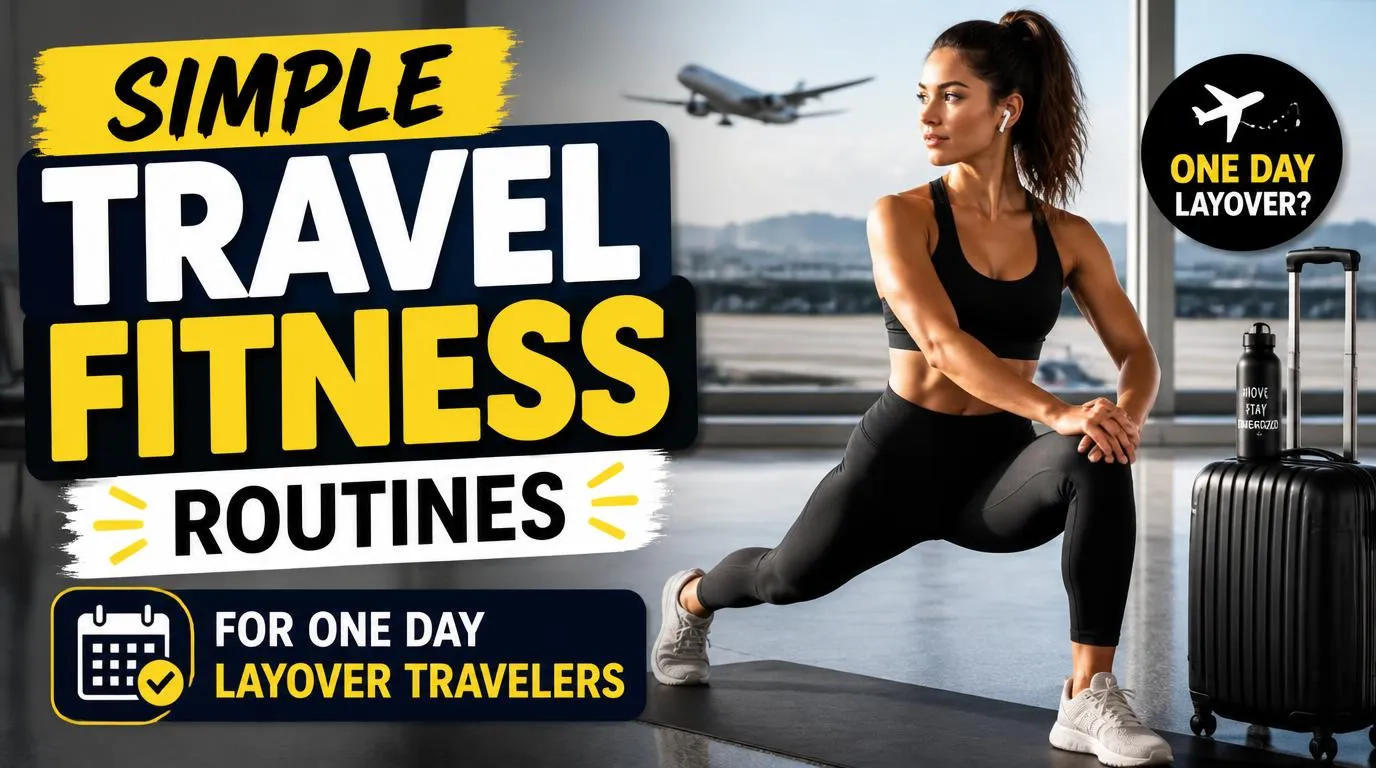
Getting through a 24-hour stopover without feeling like a rusted hinge comes down to smart preparation. Clear a small rectangle of space between your hotel bed and the television stand. Lay down a clean bath towel directly over the carpet because hospitality floors carry a massive amount of dirt.
You do not need heavy iron weights or an upscale fitness center to get your heart rate up. Lean into multi-joint bodyweight exercises that release tight hip flexors and activate dormant glutes after hours of sitting.
Avoid launching straight into explosive jumping jacks or sprint intervals when your body is cold. Pressurized airplane cabins pull moisture out of your muscle tissues, leaving tendons stiff and prone to strains. Start with twenty seconds of slow ankle circles, gentle wrist rolls, and deep diaphragmatic breathing to center your nervous system before you increase the tempo.
Terminal Pacing and Luggage Stacking
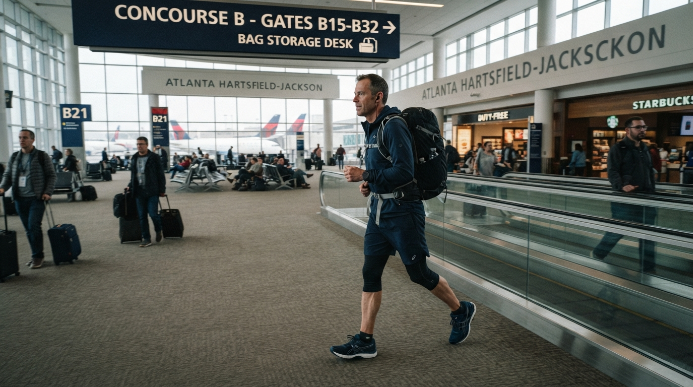
Airports double as massive walking tracks if you treat concourses like training corridors instead of waiting rooms. Step off the moving walkways, skip the electric shuttle carts, and put your walking shoes to work.
Strap on your backpack, tighten the chest strap so the load rests squarely across your upper back, and pace the open concourse corridors. Walking at a brisk clip for thirty to forty minutes stimulates your lymphatic system to flush out accumulated fluid from your calves and feet.
If your layover lasts six hours or more at a massive hub like Atlanta Hartsfield-Jackson or London Heathrow, check your heavier roller suitcase into a luggage locker or bag storage desk. Carrying only a small, balanced personal bag allows you to climb terminal staircases freely rather than idling on crowded escalators.
The Hotel Room Mobility Flush
Long flights crush your spinal discs and lock your shoulders into a defensive slouch. Counteract that forward slump the second you unlock your layover room door.
Drop into a kneeling lunge to open up your thoracic spine and tight hip joints. Step your right foot forward, plant both palms flat on the floor inside your right foot, and rotate your right hand high toward the ceiling while following it with your eyes. Hold the stretch for three seconds, bring your hand down, and complete six slow rotations per side. Follow those lunges with fifteen deep prisoner squats, keeping your hands behind your head to force your chest wide open.
I always finish mobility blocks with a deep pigeon pose directly on the bed mattress. Soft bedding supports sensitive knee joints while allowing your pelvis to sink deep into the stretch, which unglues tight piriformis muscles without scraping your kneecaps against tile.
Quick Fifteen Minute High Intensity Bodyweight Circuit
Short burst intervals deliver impressive cardiovascular perks without eating into your precious sleep window. Clear the floor, start a stopwatch, and run through a descending circuit with minimal downtime.
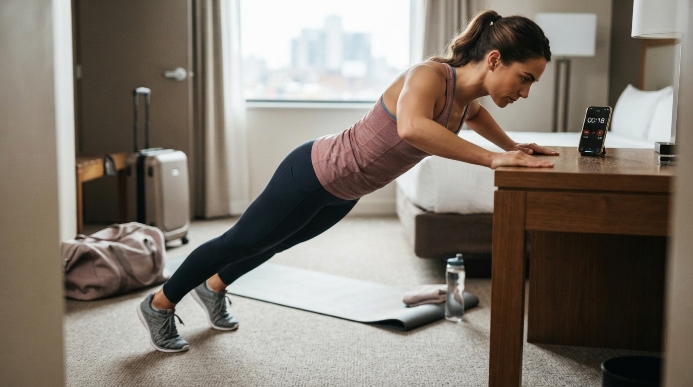
Perform twelve alternating reverse lunges, ten pushups with hands elevated on the desk, twenty mountain climbers, and a thirty-second forearm plank. Rest for forty-five seconds at the end of each round, then repeat the entire sequence four times. These high intensity intervals get your blood pumping fast and flush lactic acid buildup out of tired legs.
Executing simple travel fitness routines for one day layover travelers keeps your metabolic rate steady when airline schedules disrupt your normal eating patterns. Keep your form strict on every single repetition. If your wrists feel sensitive from carrying heavy duffel bags across terminals, swap standard pushups for standing wall pushups or chair dips.
Resistance Band Anchoring Techniques
Elastic bands take up virtually zero carry-on space while converting any bedroom into a functional gym. Toss two loop bands into your personal bag before leaving home.
Anchor a long flat band around a heavy table leg or a sturdy door handle to perform horizontal rows and face pulls. Pulling exercises pull your shoulders back and reverse the hunched posture created by airplane seats and phone screens. Perform three sets of fifteen controlled pulls, squeezing your shoulder blades together at the top of every repetition.
Wrap a mini band around your thighs just above the knees for lateral band walks across the room rug. Stepping side to side against resistance bands fires up your gluteus medius muscles. Waking up these stabilizing muscles takes direct pressure off your sacroiliac joints, which prevents that familiar post-flight lower back ache.
Desk and Chair Stretches for Tight Lower Backs
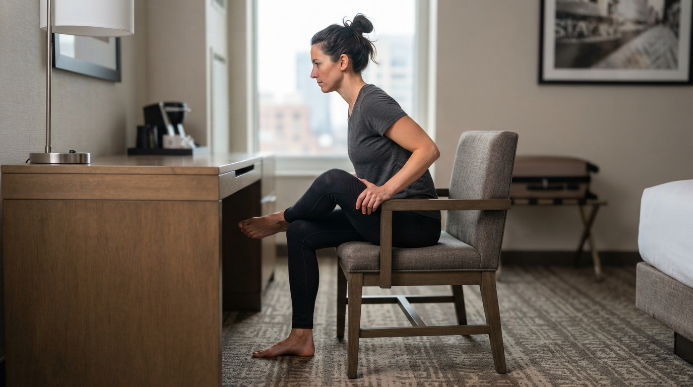
Stiff lumbar muscles make long-haul travel miserable, but you can use standard hotel furniture to loosen up fast. A solid desk chair provides the leverage you need for targeted stretches.
Sit upright on the edge of the chair, cross your right ankle over your left knee to form a figure-four position, and lean your chest forward with a flat back. This deep angle stretches the outer hips and relieves tension around the sciatic nerve. Follow this with seated spinal twists, placing your left hand on the outside of your right knee while gently turning your torso toward the wall behind you.
Stand up, step two feet behind the chair, and place both hands flat across the top of the backrest. Push your hips back and drop your head between your upper arms until your torso forms a right angle with your legs. This modified downward dog lengthens the latissimus dorsi muscles and stretches the entire posterior chain without requiring you to lie on an unsanitized floor.
Post Workout Reset and Hydration Strategy
Recovery choices dictate how refreshed you feel when boarding the second leg of an international flight. Sweating in a hotel room only works if you replace the minerals lost in the air.
Drink twenty-four ounces of water mixed with a quality electrolyte tablet right after you finish exercising. Airplane cabins maintain humidity levels below twenty percent, which dries out your muscular tissues and brings on headaches quickly.
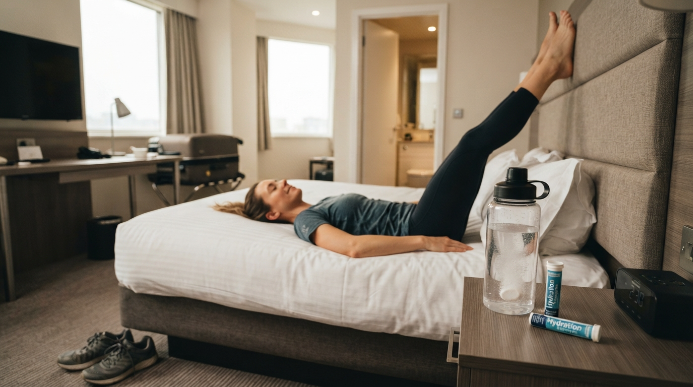
End your routine by kicking off your shoes and throwing your legs straight up against the headboard for eight minutes. Elevating your feet drains pooled venous blood back toward your heart, which cuts down on lower leg tightness. Relying on simple travel fitness routines for one day layover travelers ensures you walk onto your connecting flight clear-headed, loose, and completely energized.
Frequently Asked Questions
How do simple travel fitness routines for layover travelers prevent swelling?
Contracting your leg muscles forces pooled blood and interstitial fluid back into circulation. Extended sitting triggers fluid buildup in lower extremities, causing tight footwear and stiff ankles. Performing bodyweight squats, concourse walking, and leg elevations activates your natural muscular pumps, clearing excess fluids before your next flight.
Can I complete these movements without showering before a flight?
Focus on slow mobility drills, spinal decompression, and targeted static stretches if you lack shower access. These movements realign your spine and improve circulation without breaking a heavy sweat. Pack a travel pack of body wipes and clean deodorant in your carry-on for a quick refresh.
What is the best gear to pack for a quick layover workout?
Pack two fabric mini loop bands, a solid rubber massage ball, and lightweight running shoes. Fabric bands pack flat into exterior suitcase pockets, weigh practically nothing, and provide enough tension for a full workout without rolling up or snapping against bare skin during your routine.
Where can I exercise if my layover is spent stuck in an airport terminal?
Search for empty gate areas located at the ends of domestic concourses, or locate dedicated airport yoga rooms. Major transit hubs like Dallas Fort Worth, San Francisco International, and Amsterdam Schiphol offer quiet, carpeted wellness spaces designed specifically for stretching away from heavy passenger foot traffic.
How long should a layover workout actually last?
Limit your session to fifteen or twenty-five minutes of steady work. Workouts shorter than ten minutes fail to warm up cold joints, while sessions lasting over forty-five minutes add unnecessary fatigue to an already demanding travel itinerary. Short, focused routines provide the ideal balance of stimulus and recovery.
Conclusion
Carving out twenty minutes for deliberate movement breaks the cycle of physical stiffness on long travel days. Grab a small patch of open space, get your heart rate up, and let your muscles reset before the next departure. Which stretch are you trying on your next layover?