
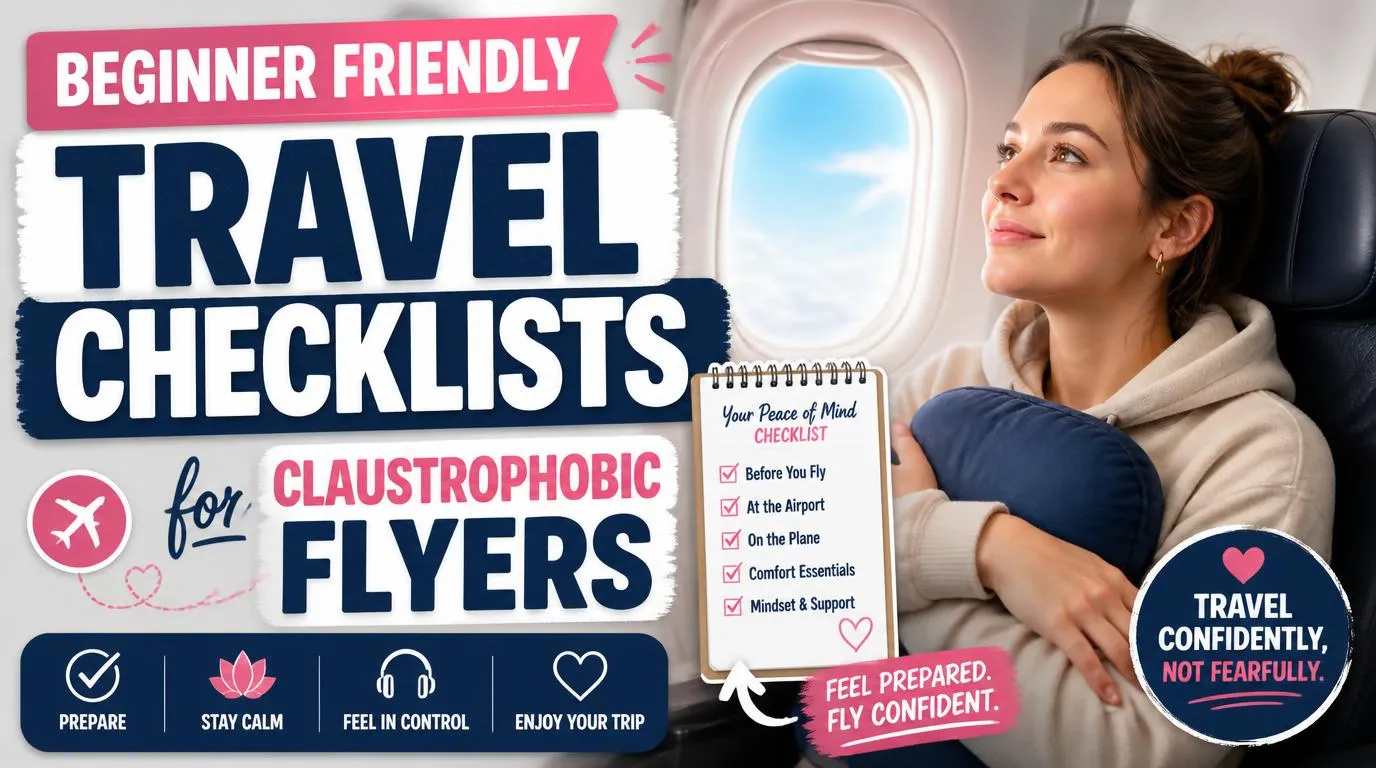
Booking your flight is where your battle against claustrophobia actually begins. You do not want to leave your seat assignment to chance. If you end up stuck in a middle seat between two linebackers on a five-hour flight, panic will set in before the plane even leaves the tarmac. Always pay the extra fee to select your seat in advance when booking on airlines like Delta or United.
Aim for the aisle seat because it gives you a tiny bit of extra breathing room and lets you get up without bothering anyone. An exit row is even better since it offers several inches of additional legroom, which instantly tricks your brain into feeling less trapped. Avoid the very back of the plane at all costs. The seats near the tail often do not recline, and the proximity to the restrooms means people will constantly be crowding your space. Try using sites like SeatGuru to check the exact layout of your aircraft before you buy.
Pre-Flight Packing List for Immediate Comfort
What you carry in your personal bag can make or break your entire flying experience. When anxiety starts to rise, sensory overload makes everything worse, so you need tools to block out the cabin environment. Always pack a pair of high-quality noise-canceling headphones, such as the Bose QuietComfort series, to drown out the low rumble of the engine and the chatter of nearby passengers. Download several hours of your favorite podcasts, familiar movies, or soothing playlists before you arrive at the terminal.
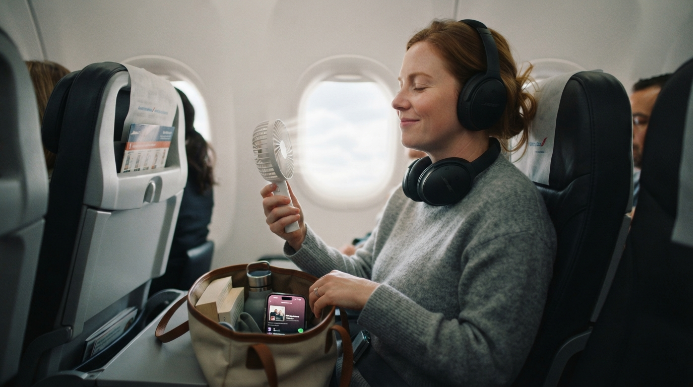
Do not rely on the airplane wifi, which is notoriously slow and unreliable when you need a distraction most. Along with audio distractions, pack a small battery-operated hand fan. Having cool air blowing directly onto your face is a proven physical trick to lower your heart rate and stop a panic attack in its tracks. I never fly without one in my pocket.
The Ultimate Beginner Friendly Travel Checklists for Claustrophobic Flyers
Having a visual guide to look at before you board keeps your brain grounded when fear starts whispering. I put together these beginner friendly travel checklists for claustrophobic flyers to ensure you never forget the small items that keep you calm. Let us break this down into three distinct mini-lists so you can pack and prepare systematically.
First, your comfort kit must contain a comfortable silk eye mask, loose clothing layers, throat lozenges, and a small bottle of peppermint essential oil to sniff when the air feels stale. Second, your digital kit should have a fully charged Anker power bank, offline puzzle games like Tetris on your phone, and guided meditation tracks pre-loaded on Spotify. Third, your medical kit needs any prescribed anxiety medication, fast-acting mints, and a bottle of ice-cold water purchased right after passing through security.
Keeping these items organized in a dedicated, accessible pouch under the seat in front of you means you do not have to reach into the overhead bin when anxiety strikes. Having everything within arm’s reach provides immense peace of mind.
Airport Strategy to Reduce Pre-Boarding Stress
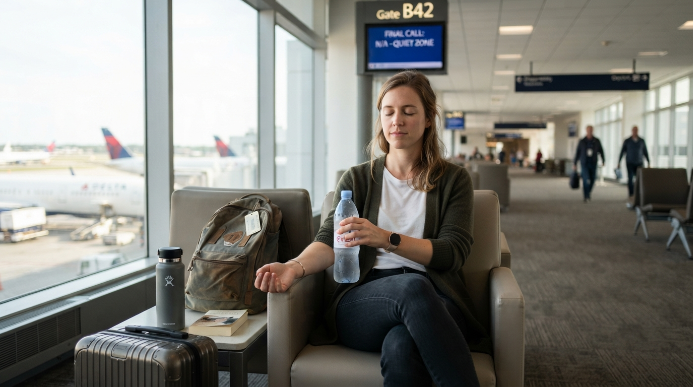
Rushing through security with minutes to spare will send your cortisol levels through the roof before you even see the plane. Give yourself at least an extra hour beyond the recommended arrival time to keep your nervous system relaxed. Use this extra time to find a quiet gate away from your own crowded boarding area to rest quietly. Walking around the terminal helps burn off excess adrenaline before you are forced to sit still for hours.
You can also use this time to buy a cold beverage from a terminal shop. Holding a cold bottle of water against your wrists is a simple grounding technique that helps regulate your body temperature when panic threatens to take over. Avoid drinking too much caffeine at the airport, as it mimics the physical sensations of a panic attack and will only make you more sensitive to the enclosed space of the airplane cabin. Stick to herbal tea or plain water instead.
Handling the Boarding Process Mindfully
Standing in a slow-moving, packed jet bridge is one of the most common triggers for flight-related panic. You do not have to join the mad rush of people crowding the gate as soon as boarding is called. If you have an assigned seat, consider waiting until the very end of the boarding process to step onto the plane. This minimizes the amount of time you spend sitting in a hot, crowded cabin while everyone else struggles to stow their luggage.
Use this waiting time to practice your grounding exercises in the spacious boarding area. If you prefer to get settled early to secure overhead bin space, ask the gate agent if you can board with an earlier group due to your medical anxiety. Once you step into the jet bridge, keep your eyes focused forward on your destination rather than looking at the crowd around you.
In-Flight Distraction and Breathing Techniques
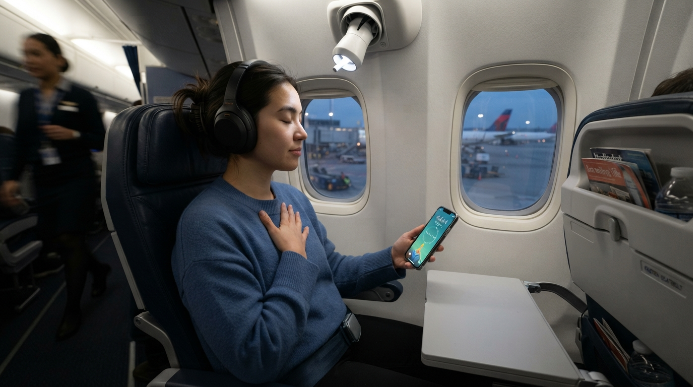
Once the boarding doors close and the plane pushes back, you need a plan to keep your mind occupied. The secret to surviving the flight is staying ahead of the panic rather than trying to cure it once it hits. As soon as you sit down, turn on your personal overhead air vent and aim it directly at your face.
If you start to feel the walls closing in, close your eyes and practice the box breathing method. Inhale for four seconds, hold for four seconds, exhale for four, and hold again. This simple pattern physically prevents your body from hyperventilating and signals to your brain that you are safe. Combine this with an active mental distraction, like playing an engaging mobile game or writing a detailed journal entry on your phone. Keeping your brain actively working on a task makes it incredibly difficult for your mind to focus on the small space around you.
Dealing with Sudden Turbulence and Delays
Sitting on the tarmac or bumping through rough air can easily trigger a claustrophobic episode. When the plane stops moving or starts shaking, it is easy to feel trapped in a tiny, fragile tube. Remind yourself that turbulence is completely normal and is just the aerial equivalent of potholes on a road.
If a delay occurs on the tarmac, do not sit there stewing in your anxiety. Strike up a light conversation with your neighbor or notify a flight attendant that you are a nervous flyer. Flight crews deal with anxious passengers daily and can offer you ice or an extra cup of water to help soothe your nerves. Focusing on a physical sensation, like sucking on a sour candy, can instantly redirect your brain away from the feeling of confinement and ground you in the present moment. Carry a pack of Sour Patch Kids specifically for this purpose.
Pre-Boarding Communication with Gate Agents and Flight Crew
Speaking up about your fears before you step onto the aircraft can relieve a massive amount of pressure. Many anxious travelers try to hide their claustrophobia, but being honest with the staff is a total lifesaver. When you arrive at your gate, kindly explain to the gate agent that you are a claustrophobic flyer and ask if there are any open aisle seats or rows with empty middle seats. They will often accommodate you if the flight is not fully booked.
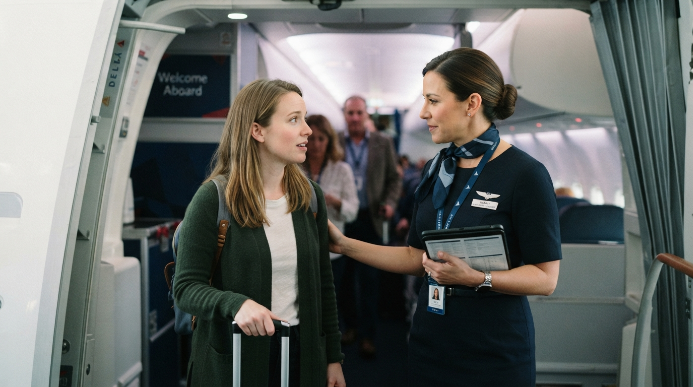
Once you step onto the plane, make brief eye contact with the lead flight attendant and let them know you struggle with tight spaces. They will appreciate the heads-up and will keep a quiet eye on you throughout the journey. Knowing that the crew is aware of your situation creates a psychological safety net, making you feel less isolated in your seat.
Post-Flight Decompression and Celebration
Stepping off the jet bridge and back into the open terminal is an incredibly victorious feeling. Do not rush to escape the airport immediately if you are feeling dizzy or overwhelmed after landing. Find a quiet spot in the arrival terminal to sit down, drink some water, and let your adrenaline levels return to normal.
Celebrating your achievement is an essential part of rewriting your brain’s association with flying. Take a moment to acknowledge that you faced a major fear and made it to your destination safely. Treat yourself to a nice meal or a special souvenir once you reach your hotel as a reward. By implementing these beginner friendly travel checklists for claustrophobic flyers, you can slowly retrain your mind to handle air travel with confidence. Your mind will begin to remember the reward rather than just the fear.
FAQs
Where is the best place to sit on a plane if I suffer from claustrophobia?
The aisle seat is your best bet, especially near the front or mid-cabin of the aircraft. Being close to the exit rows gives you a clear line of sight, while the aisle seat lets you stretch your legs out slightly and stand up easily without feeling trapped by other passengers.
How can I stop a panic attack while stuck in an airplane seat?
Try pointing the overhead air vent directly at your face to get cold air moving. Sip on ice-cold water, suck on a strong peppermint candy, and practice slow, deep belly breathing. Grounding yourself with physical sensations helps distract your brain from the confined space.
Why are beginner friendly travel checklists for claustrophobic flyers so helpful?
These curated lists ensure you do not forget the small sensory tools that keep you calm. Having everything pre-planned reduces decision fatigue at the airport, so you can board the plane knowing you have a physical safety net right under your seat.
Should I tell the flight crew that I am a nervous, claustrophobic flyer?
Yes, telling the flight attendants during boarding is incredibly helpful. They are trained to handle passenger anxiety and will check on you during the flight, bring you extra water, and keep you updated on flight progress to make you feel safe.
Can wearing loose clothing really reduce my cabin anxiety?
Tight waistbands and restrictive fabrics can make you feel even more physically confined. Wearing loose, breathable layers allows you to adjust to fluctuating cabin temperatures easily, which keeps your nervous system from going into high alert during the flight.
Conclusion
Taking to the skies when you fear tight spaces is a massive challenge, but the right preparation completely changes the experience. By packing smart and choosing your seat wisely, you can regain control over your flying anxiety. What is the one comfort item you never leave behind when you travel?